The CLP government has broken its promised 2030 emissions target - in another sign that the Territory is being treated like a sacrifice zone for the gas industry.
During budget estimates, it was revealed that the Country Liberal Party (CLP) government has not adopted it's promised 2030 emissions target.
The CLP committed to a 43 per cent reduction in the NT's greenhouse gas emissions by 2030, six weeks out from the 2024 Territory election.
This is more than a broken promise – abandoning our climate targets is like pouring petrol on a fire.
The Government can't claim to be serious about climate change while fast-tracking new gas projects like fracking in the Beetaloo and the Middle Arm gas and petrochemical hub and abandoning emissions targets completely.
Take action now and call on Solomon MP Luke Gosling to stand up for Darwin and Palmerston by redirecting the Middle Arm subsidy.
Gas expansion through carbon dumping
We've also seen the Albanese Government spinning one of the world’s largest carbon dumping projects as a ‘low carbon' project while opening the floodgates to massive gas expansion across the Northern Territory.
In a move many would label as greenwashing, the Albanese Government has designated the Bonaparte Carbon Capture and Storage (CCS) project, 250km northwest of Darwin as a Major Project and claimed it will “enable the development of low-carbon industries in the region”.
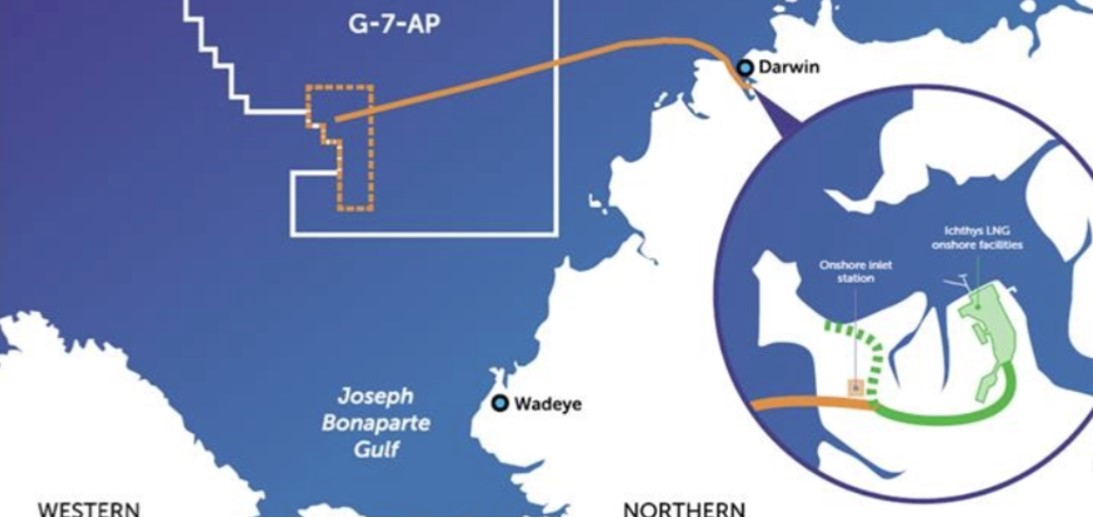
In fact, the joint venture between some of Australia’s biggest polluters and fossil fuel companies - Inpex, Woodside and TotalEnergies - could subject Northern Territory residents to the world’s largest carbon dumping project.
The Environment Centre NT is concerned the fast-tracking of one of the world’s largest carbon dumping projects will enable a massive expansion of the gas production in the Northern Territory, by greenwashing the planned expansion of Inpex Ichthys LNG, the Middle Arm gas and petrochemical hub, fracking in the Beetaloo Basin, and Santos’ toxic Barossa project.
A carbon import terminal is also planned for the $1.5 billion federally funded Middle Arm industrial precinct in Darwin Harbour, paving the way for carbon pollution to be imported via ships from Korea and Japan by 2030.
Dead last in the race to renewable energy
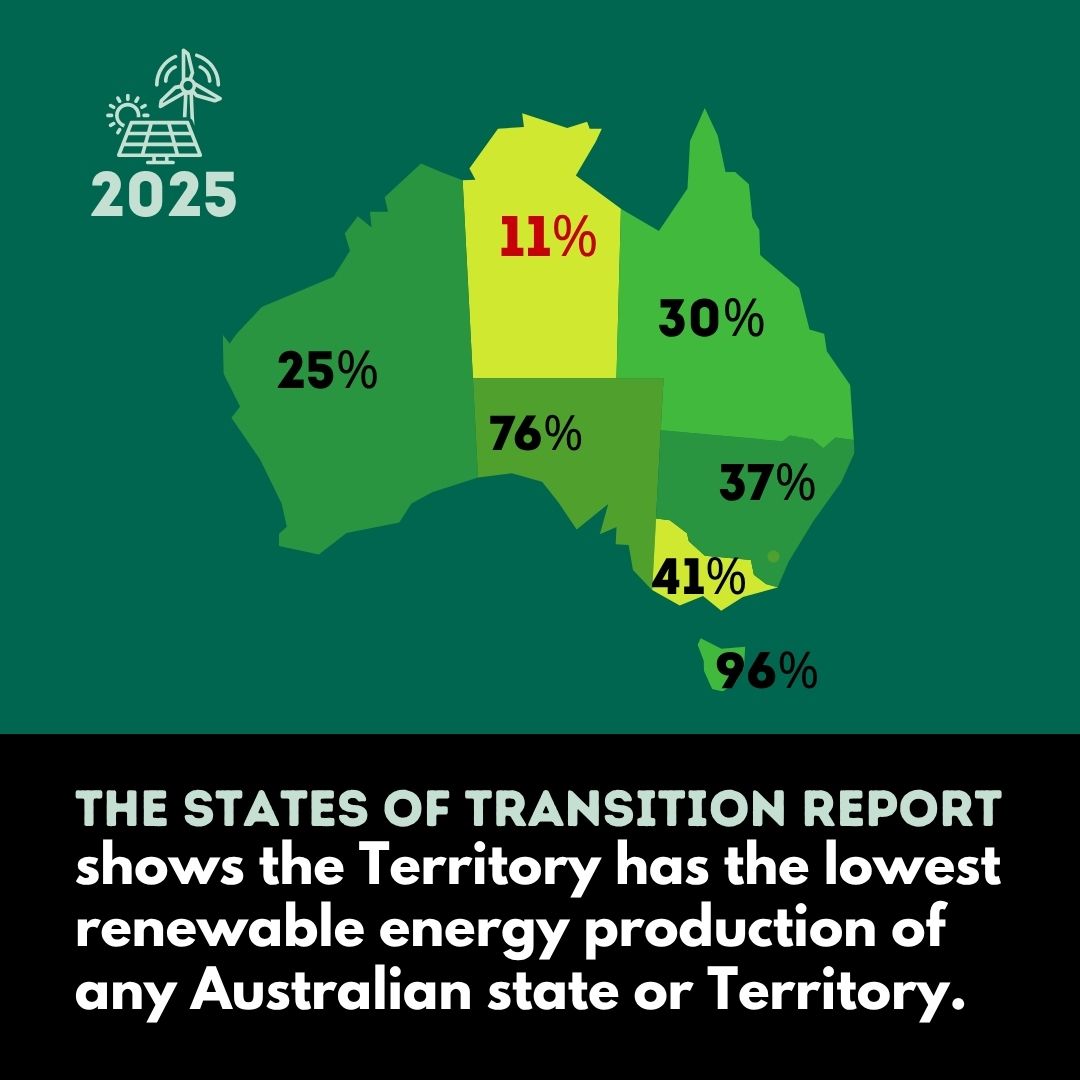
A new report has exposed the stark reality of Australia's renewable energy divide, with the Territory falling behind in the race to 100% renewable energy.
The figures are revealed in the new States of Transition report, which was commissioned by Australia's leading conservation councils.
The Northern Territory is home to some of Australia's most abundant solar and wind resources – but is languishing at the bottom of the renewable energy ladder.
Picture this: While Tasmania basks in the glory of 97% renewable energy and South Australia powers ahead with 77% clean electricity, the Northern Territory limps along at a mere 11%. Yes, you read that right – 11%.
If current deployment rates are maintained, renewable energy will account for just 22% of the Territory's energy mix by 2050.
The report calls for the Territory to dust off its policy playbook and reintroduce legislated renewable energy targets, which were dumped by the CLP government in March.
Otherwise, the Territory could get stuck in the past while the rest of the nation races toward a clean energy future.
Very little in the pipeline
The report warns the Northern Territory has “very little in the pipeline” other than the SunCable project, which aims to be the world’s largest solar farm, delivering 4GW of capacity locally for the Katherine and Darwin network.
The SunCable project has received environmental approvals from both the Commonwealth and Northern Territory Governments and is hoping to reach a final investment decision by 2027 but is unlikely to contribute to the energy network until at least 2032.
The report also confirms the findings in the Environment Centre NT’s Recharging the Territory report which show that the NT has one of the lowest rates of household solar installations in the country. The Recharging the Territory package would generate 7,622 jobs across the NT.